

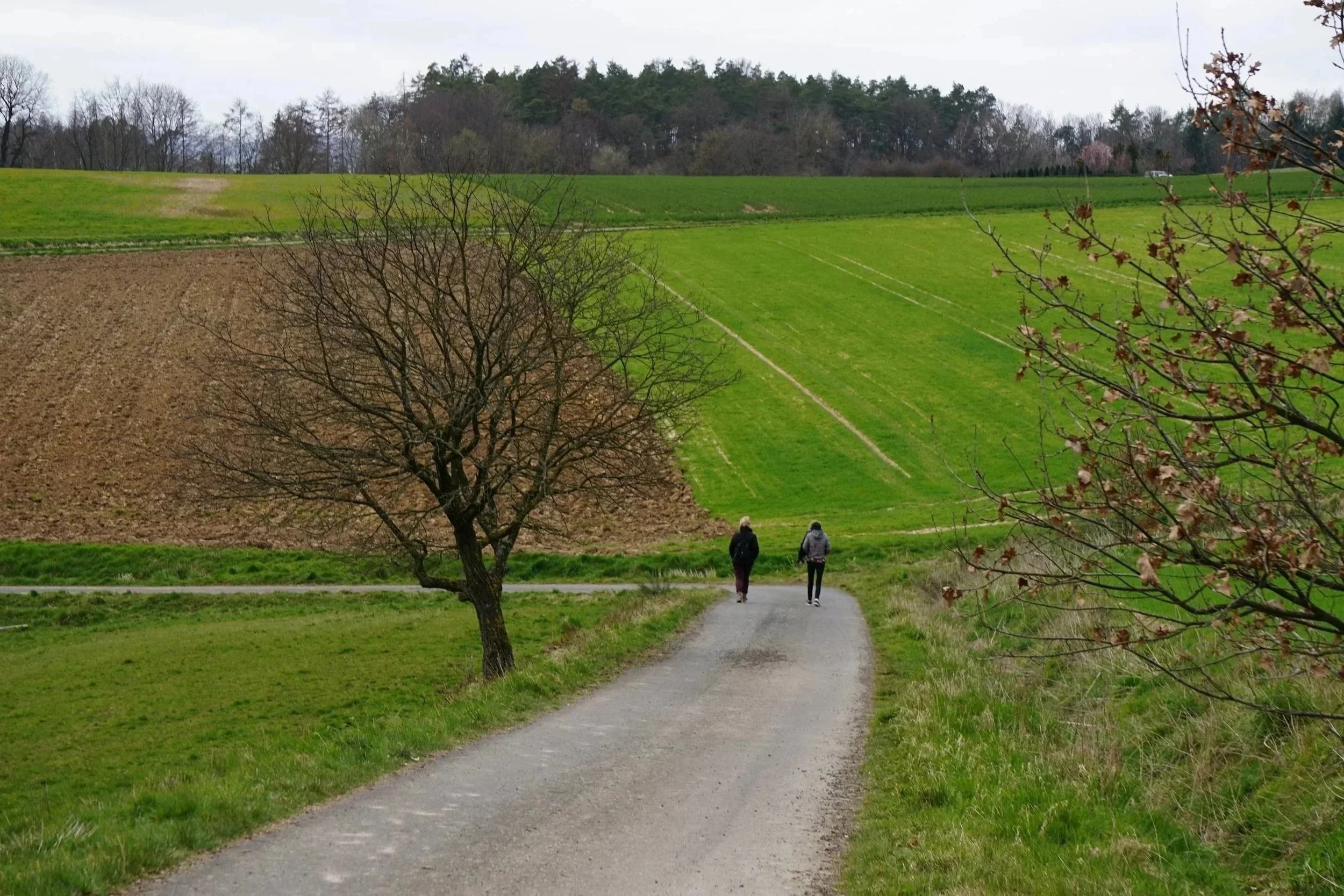
Walk and Talk Therapy in Minneapolis
Therapy that moves with you because some things are easier to say when you're not sitting still.
Outdoor therapy sessions on Twin Cities trails for athletes and active people. Same clinical work. Intentional confidentiality. You're just moving while you do it.
You know what helps you process things.
It's not sitting in a chair under fluorescent lights.

Maybe you…
Have tried traditional therapy and spent the first twenty minutes of every session just warming up to the room.
Built a relationship with movement and effort, and now you're supposed to sit still and talk about an injury, a bad season, or a retirement you didn't plan.
Just think better when your body has something to do.
For a lot of people, the stillness itself becomes the obstacle. The office format works beautifully for some, and for others, it's the wrong instrument entirely.

What Walk & Talk Therapy Actually Is
Everything that makes therapy therapy stays intact, your clinician is licensed in Minnesota, your session is documented, your treatment plan is clinical. What changes is the setting, the body position, and what that does to the conversation.
Lower social intensity — side-by-side positioning reduces the pressure of face-to-face conversation, making it easier to surface difficult material.
Nervous system regulation — movement provides a natural rhythm that helps regulate stress and anxiety during the session.
A better fit for athletes — if your body is where you process things, moving therapy gives you back a familiar mode.
Faster warm-up — hard conversations tend to surface sooner and land softer when you're in motion.
Same clinical rigor — licensed therapists, documented sessions, evidence-based treatment. Outdoors doesn't mean less professional.
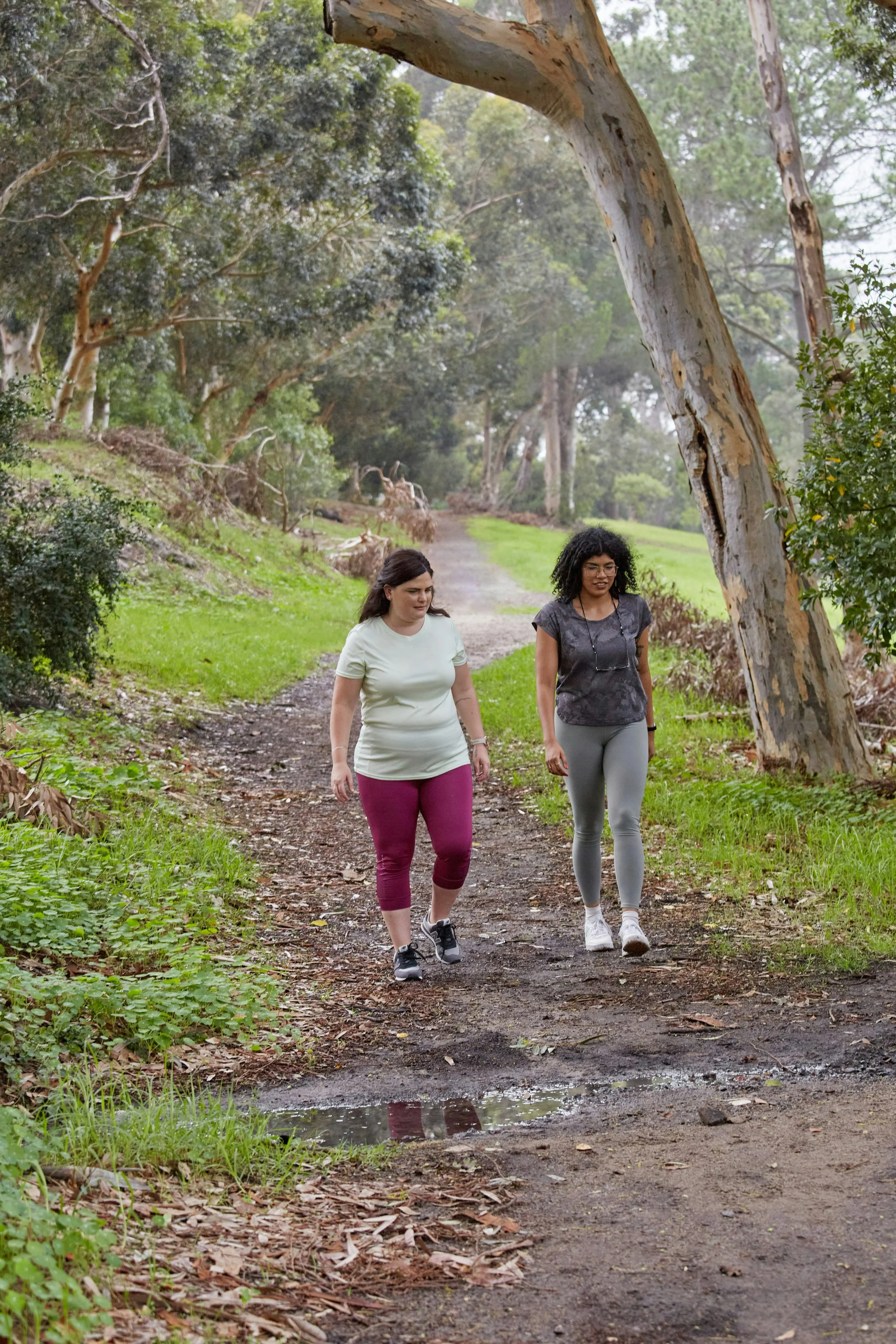
Walk and talk therapy is licensed outpatient psychotherapy conducted outdoors while walking on a trail or in a park. You meet your therapist at an agreed-upon spot, walk side by side at a conversational pace, and do the clinical work you'd do in an office. There's no exercise goal, no pace to hit, no distance to cover. The walking is the container, not the point.
Why moving changes the conversation
Sitting face-to-face is a high-intensity social position.
You're being looked at. There's an expectation to fill the silence. For some people that pressure is useful, for many others, it's why the first fifteen minutes of every session are spent just warming up.
Side-by-side changes that.
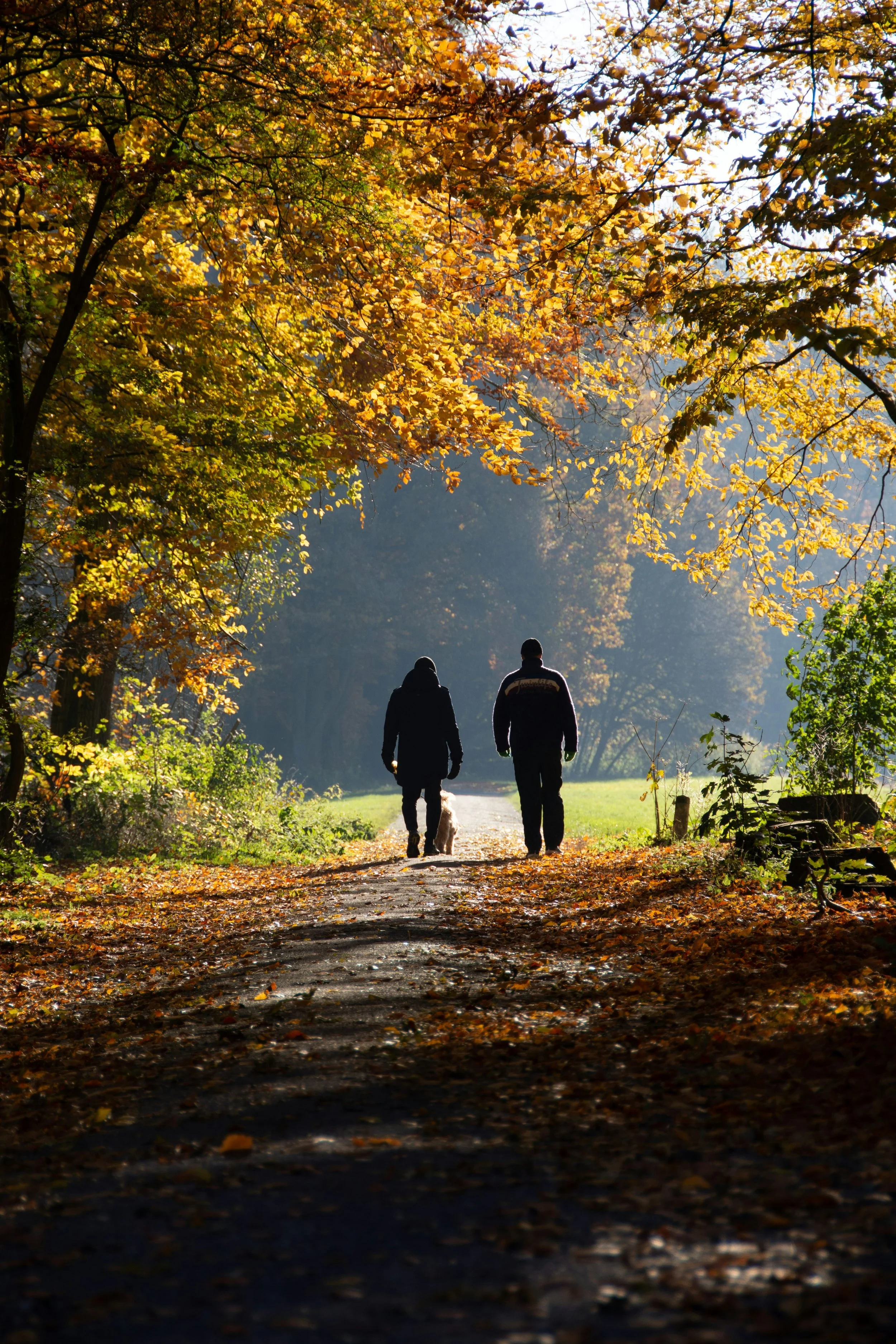
Eye contact becomes optional. Silence stops feeling like a failure and starts feeling like walking. The nervous system gets a rhythm to hold onto, and hard material tends to surface sooner and land softer.
37 men, 6 weeks
A 2025 randomized pilot study in Australia found walk-and-talk sessions produced improvements in depression comparable to indoor therapy, with somewhat larger gains in stress and anxiety. The authors flagged the small sample, short window, good weather, and a group that already preferred walking. It suggests that for people drawn to it, moving therapy works — not that outdoors beats indoors.
What a Session Looks Like
-
We use quiet public trails and park paths within reach of our New Hope office, chosen for low foot traffic and easy parking (places such as Eagle Lake, Medicine Lake, or Elm Creek Park Preserve to name a few options) . You’ll get the exact meeting spot and parking details before your session, and you can request a different location at any point.
-
Sessions run 50–55 minutes, the same as any session in our office. We meet at the trailhead, walk, and finish where we started. If you’d rather sit for part of it — a bench, a picnic table, the last ten minutes — that’s a normal request and you don’t need a reason.
You can also mix formats. Some clients walk in summer and sit indoors in January. Some walk when they’re stuck and sit when they’re doing focused skills work.
-
Whatever you’d wear to walk for an hour. Shoes you can stand in comfortably, layers you can shed. Bring water. Nobody is timing you, and there’s no fitness expectation attached to any of this — the pace is set by the conversation, not the other way around.
-
You live here. You already know the question.
We run walk and talk sessions from roughly spring through early winter, and we make the call on individual days based on temperature, wind chill, precipitation, and ice. When the weather says no, your session still happens. We simply move to the office in New Hope or go virtual, and we decide together, so nobody is standing in a parking lot in the Minnesota snow.
-
This is the question we get most, and it deserves a direct answer.
Your session is protected by the same confidentiality laws outdoors as indoors. What changes is the environment — a public trail is public, and there is a small but real chance of passing someone one of us knows.
Our approach: we do our best to choose low-traffic locations and off-peak times. We stop or shift topics when anyone comes within earshot. We agree in advance on what happens if you run into someone you know: you decide whether to introduce us, and we follow your lead, with no obligation to explain who we are. We don’t carry files, and we don’t discuss clinical content within range of anyone else.
Before your first outdoor session, we walk through a specific informed consent conversation covering these limits, along with the practical things — emergencies, phones, what happens if a session needs to end early. You sign off on it knowing exactly what you’re agreeing to. If public space feels like too much risk for what you want to talk about, the office is always available, and choosing it costs you nothing.
Who This Is For
Walk and talk therapy tends to fit well if you:
Think and process better while moving — Your body helps your mind make sense of things
Feel activated or self-conscious in face-to-face conversation — Side-by-side positioning lowers the social intensity
Are working through injury, return-to-sport fear, or shifting athletic identity — Gentle motion while talking about motion helps process fear differently
Are managing anxiety, life transitions, burnout, or low mood — Movement provides nervous system regulation during the work
Have avoided therapy partly because the format felt wrong — The office setting itself was a barrier
We'd steer you toward indoor or virtual sessions if you:
Are in acute crisis or need close clinical monitoring
Are working through trauma content that needs a controlled, private setting
Have a health or mobility consideration that makes an hour of walking inadvisable (though seated outdoor sessions and hybrid formats are both available — talk to us)
Simply want privacy that a public trail can't guarantee
None of these are permanent categories. Plenty of clients move between formats as what they're working on changes.
Cost & Insurance
Walk and talk sessions are priced the same as our standard therapy sessions:
Licensed clinicians
$225 / 50–55 min.
Pre-licensed clinicians
$175 / 50–55 min.
We're out of network with insurance, and we do two things to make that workable:
Before you start, we check your out-of-network benefits so you know your actual expected cost rather than guessing
Once you're a client, we file your claims for you
Payment is by credit, debit, or FSA/HSA card through a secure portal, charged at the end of the day after each session.
Athletes serving athletes.
Skadi is a team of therapists and mental performance consultants who are athletes and coaches ourselves. We're not explaining sport from a textbook — we live it.
What makes us different:
Licensed mental health professionals trained in sport psychology — you get clinical expertise and sport-specific understanding in the same person
Athletes treating athletes — We understand base phases, DNFs, what it means when your body stops responding the way it used to, and why a bad race can feel like an identity crisis
Evidence-based and inclusive — Research-backed approaches delivered with a human-first, identity-affirming lens
Flexible formats — Walk and talk, office, virtual, or a mix — we match the format to what you're working on
Mental health therapy (including walk and talk) is available to Minnesota residents only, because that's where our clinicians are licensed. Performance coaching is available nationwide and virtually.
Frequently Asked Questions
-
Yes. The same Minnesota confidentiality laws and HIPAA protections apply outdoors as in the office. The difference is environmental: trails are public. We reduce that risk by choosing quiet locations and off-peak times, pausing when anyone is within earshot, and agreeing in advance on how to handle running into someone you know. You’ll review and sign a specific informed consent covering these limits before your first outdoor session.
-
Real therapy. Walk and talk sessions are licensed mental health therapy, documented and billed like any other session, available to Minnesota residents. If you’re looking for performance coaching, we offer that too, nationwide and virtually.
-
No. The pace is conversational and set by you. There’s no distance, no target, and no fitness component to any of it. If walking for an hour doesn’t work for your body, tell us and we’ll find a format that does.
-
Your session still happens. We move to our New Hope office or go virtual, and we decide together that morning.
-
It’s billed identically to standard therapy. We’re out of network, we check your out-of-network benefits before you start, and we file claims on your behalf.
-
In-person therapy is available to Minnesota residents in the Twin Cities metro, based out of our New Hope office. Virtual therapy is available statewide, and performance coaching is available nationwide.

Ready to Start?
Start with a free consultation — no cost, no commitment.
We'll talk about what you're working on, whether walking suits it, and who on our team is the right fit. If we're not the right fit, we'll tell you that and point you somewhere better.
What happens next:
Book your free consult.
We'll talk about your goals, concerns, and whether walk and talk therapy is a good fit.
If it is, we'll match you with a provider, confirm logistics, and schedule your first session.
If it's not, we'll recommend a better format or point you to another resource.
No pressure. No sales pitch. Just an honest conversation about whether this approach works for what you need.